Dyson air purifiers
Dyson air purifiers.
Clear the airWith a Dyson air purifier, you ensure cleaner air in your home. These air purifiers filter 99.95% of the particles from the air. You also reduce allergy complaints, for example. How well the air purifier cleans the air differs per model. We compare the different Dyson air purifiers here.

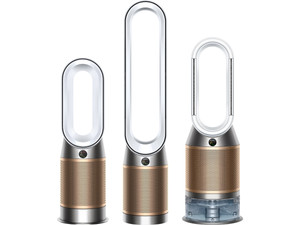
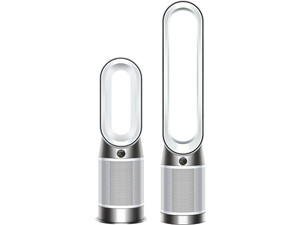
Compare the Dyson air purifiers
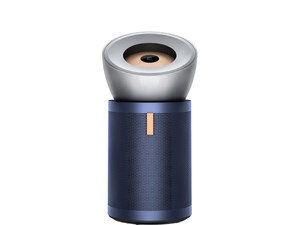
Dyson Big + Quiet
Cleans the air thoroughly and quickly
This model has the most powerful air flow, so you can purify large spaces up to 100m2. It's more silent than other models at the highest setting.
You remove dust, allergens, and viruses and also destroy formaldehyde gasses.
With the app, you can control the air purifier remotely and gain insight into the air quality.
Thanks to the powerful airflow and the low noise level, it cleans large rooms up to 100m2 without much noise.
Cleans the air thoroughly
You clean the air better, thanks to the catalyst filter that destroys formaldehyde. With the app, you can keep an eye on the air quality.
You remove dust, allergens, and viruses and also destroy formaldehyde gasses.
With the app, you can control the air purifier remotely and gain insight into the air quality.
From
to€ 699,-
€ 799,-
Cleans the air the least thoroughly
The Dyson Pure has a filter 2 layers with which it cleans impure air. These models don't remove formaldehyde gasses from the air.
With the HEPA 13 + carbon filter, it removes dust, allergens, and viruses from the air.
From
to€ 499,-
€ 599,-
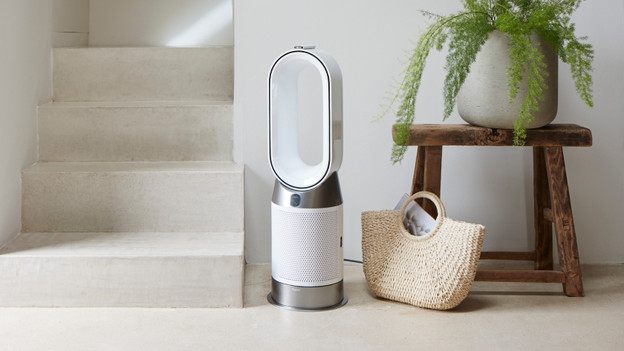
Cleaner air thanks to improved filters
The Dyson air purifiers are closed off 360 degrees around according to HEPA 13 standard. Thanks to this, the air doesn't escape from the purifier before it's filtered. All particles that enter the air purifier stay in it. The completely airtight HEPA 13 filter system filters 99.95% of all particles up to 0.1 micron from the air, like ultra fine dust, dust, pollen, allergens, and viruses. According to the European Centre for Allergy Research (ECARF), this helps reduce the complaints of people with hay fever, allergies, and asthma.
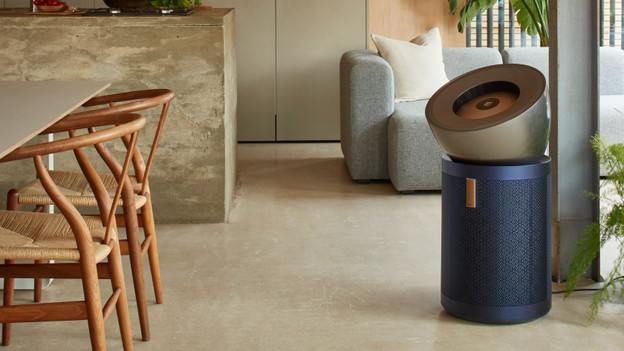
Remove formaldehyde from the air
The Dyson Formaldehyde and the Big + Quiet have a catalyst filter. This filter destroys formaldehyde and turns it into CO2 and water. Formaldehyde is a gas that's released from household objects. Think of carpet, furniture, and paint. At a high temperature or high humidity, more of this gas is released. If you breath a lot of this gas for a long time, you can get health complications. You could possibly get headaches and irritated mucosa and airways. With these Dyson air purifiers, you can remove this gas from the air and prevent complaints.
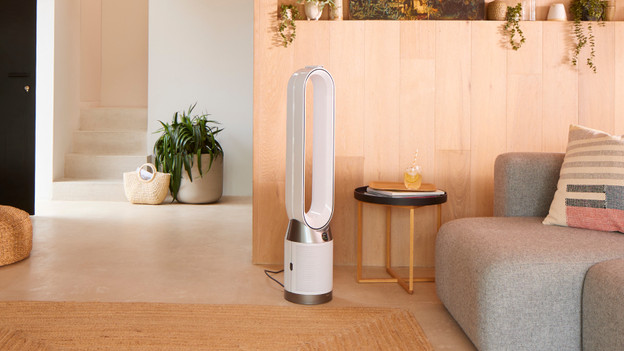
Heat and cool your home
Dyson has Cool and Hot+Cool air purifiers. These models have a fan function or a ventilation and heating function. You can clean the air with these air purifiers, but also cool and heat it. On a hot day, you can cool down with the fan function. Is it cold? Turn on the heating function. You can set the desired temperature up to 37°C. The air purifier then heats the room to the set temperature.
FAQ
Which substances does a Dyson air purifier filter?
A Dyson air purifier filters 99.95 percent of particles down to 0.1 microns from the air. These are particles such as dust, mold spores, viruses, and pollen. Because it also removes allergens, it reduces hay fever and asthma issues. With the active carbon filter, the air purifiers also capture gases and odors. Some models also have a catalytic converter filter, which destroys formaldehyde gases.
Can I use a Dyson air purifier as a fan?
All Dyson air purifiers have a fan function. This means you can also use them as a fan to ensure a cool airflow on a hot day.
Do I have to leave my Dyson air purifier on all the time?
A Dyson air purifier works best if you always keep it in automatic mode. In this mode, the air purifier measures and monitors the air quality all the time. It then adjusts the speed of the airflow itself and purifies the air only when necessary.
What's the difference between the CADR and Polar measurement methods?
Most air purifier manufacturers measure the performance of air purifiers using the Clean Air Delivery Rate, also known as CADR. This indicates how many cubic meters the air purifier purifies per hour. It's measured in a small space with 1 sensor. Dyson uses the Polar test. They measure the performance of an air purifier in a large room with 9 sensors.

